For years, the women of Afghanistan have faced immense challenges in accessing timely humanitarian aid. In any crisis, every second counts, but for many women—especially those living in remote districts or managing female-headed households—their voices often got lost before reaching the centralized systems designed to help them. The Afghanistan Solidarity For Social & Humanity Organization (ASSHO), in close collaboration with UN Women and the Women’s Peace & Humanitarian Fund, has set out to change that permanently with the launch of the Helping Hands mobile application.
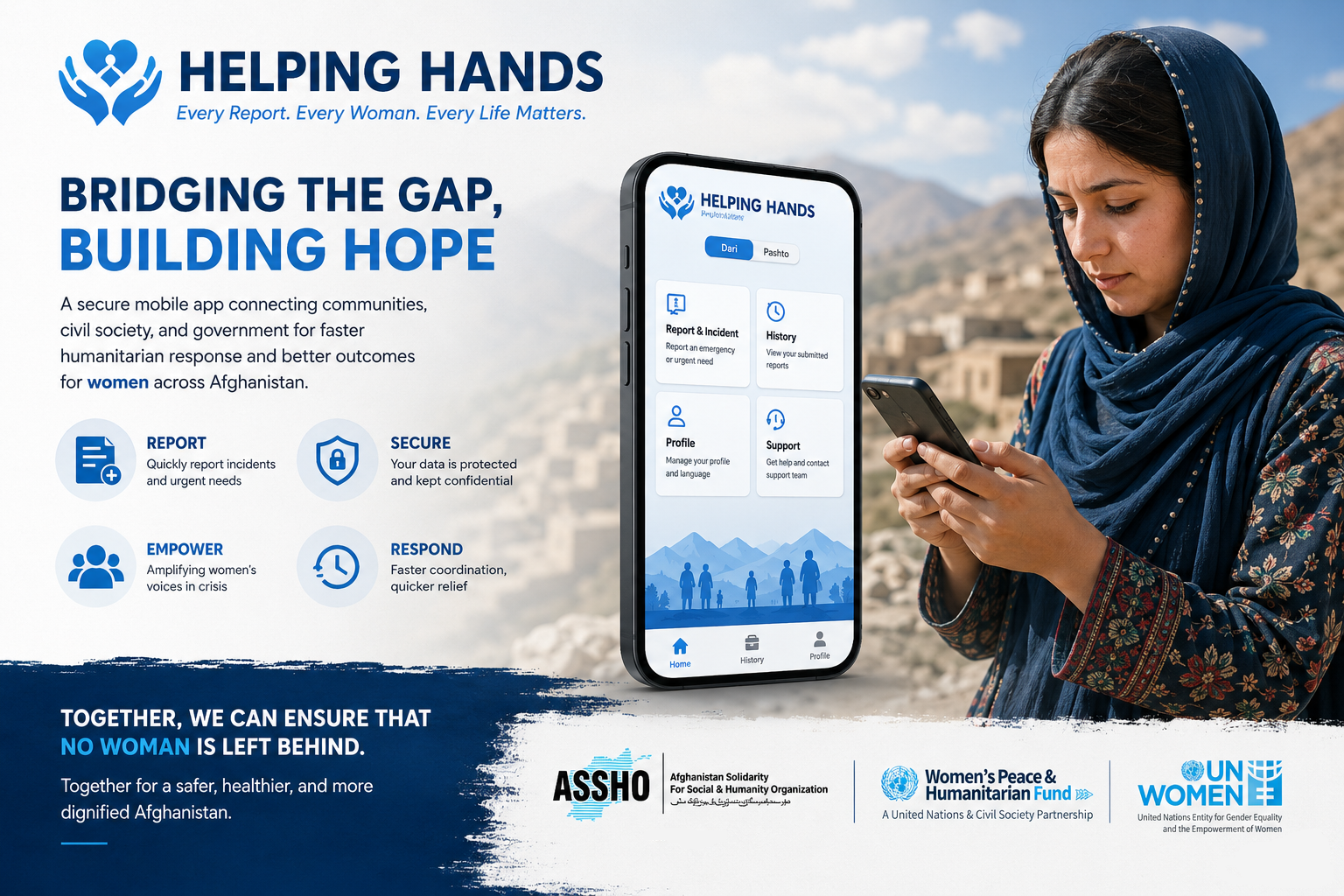
At its core, Helping Hands is a streamlined incident reporting tool for Civil Society Organizations, who serve as the primary “eyes and ears” on the ground. But for Afghan women, this app represents something much deeper: a direct, secure, and rapid line to safety, health, and dignity. Historically, a woman in crisis—whether facing a medical emergency, a safety concern, or an urgent food shortage—might wait days for a response. Now, a CSO can document her specific situation in real time using the Report & Incident feature. By entering her name, National ID, province, and district, the app ensures that aid is no longer dispatched blindly but is routed precisely to the woman who needs it most.
One of the most transformative aspects of Helping Hands is how it handles maternal and family health emergencies. The app is not a dead end; it is a direct bridge to the relevant government departments, such as the Ministry of Public Health. When a CSO submits a report about a medical supply shortage or a specific health crisis involving a pregnant woman or a young child, the information flows instantly to an Admin MIS Dashboard. There, an administrator reviews, verifies, and prioritizes the case before forwarding it to the correct health sector. What once took days of paperwork can now happen in hours, and in the context of maternal health, that reduction in response time is quite literally the difference between life and death.
The developers of Helping Hands also understood that in Afghanistan, reporting an incident involving a woman requires absolute privacy and discretion. The app is built with rigorous security protocols to protect sensitive field data. CSOs are trained to sign out after every shift, especially when using shared mobile devices, to prevent unauthorized access. Furthermore, only authorized administrators can view submitted reports on the central dashboard, which means a woman’s personal details remain confidential until the official response team is ready to act. This level of protection encourages more women and their advocates to come forward without fear of exposure or retaliation.
Another powerful feature is the app’s full support for Dari and Pashto. A female CSO or a woman reporting an incident can toggle between languages in the Profile settings, allowing her to describe her situation in the language she knows best. This ensures that critical details about the type of emergency, the number of people affected, and immediate requirements are communicated clearly, reducing the risk of misunderstanding. The History feature further empowers women by providing transparency. A CSO can return to the History tab at any time to check whether her report is still “Under Review,” has been “Forwarded to the Health Department,” or requires action. For women who have long felt ignored by centralized systems, seeing that their report has been acknowledged and acted upon is a powerful step toward trust and accountability.
Resource distribution has historically been another major barrier to women’s welfare. Without accurate, real-time data, administrators were often working blind, sending supplies to the wrong places or too late. The Helping Hands workflow solves this by guiding CSOs step by step: from identifying the incident and filling out core information to uploading photos or videos as attachments and hitting submit. Once the admin validates the report, it is forwarded to the specific sector that needs to respond, whether that is health, food security, or emergency relief. This means that a widow living alone in a flood-affected district is no longer invisible. Her exact coordinates and needs reach the right department, and resources are distributed efficiently to the areas of greatest need, where women and children are often the primary victims.
None of this would be possible without the dedication of the CSOs themselves. They are the bridge between affected populations and the centralized management system. By keeping their profiles updated, using their most fluent language for clarity, and providing accurate location data, they ensure that every report they submit has the power to trigger a “Quick Relief” response. ASSHO encourages all CSOs to practice with a test report, save the support contact information, and remember that their accuracy and timeliness directly save lives.
The Helping Hands app is more than software. It is a digital promise to the women of Afghanistan that they will no longer be forgotten in the chaos of an emergency. Their voices, entered into a mobile phone by a trusted CSO, now travel instantly to the desks of those who can help.
